An American military tribunal prosecuted 23 German physicians and administrators for war crimes and crimes against humanity, including criminal medical experimentation. The tribunal's judgment articulated principles for permissible human experimentation that became known as the Nuremberg Code.
Ten principles for permissible human experimentation articulated in the judgment of the Doctors' Trial at Nuremberg. The principles emphasized voluntary consent, scientific justification, proportionality of risk, avoidance of unnecessary suffering, participant withdrawal, and investigator responsibility.
Clinical trials of oral norethynodrel as a contraceptive began in Puerto Rico in 1956, involving Gregory Pincus, Celso-Ramón García, John Rock, Edris Rice-Wray, and Puerto Rican research participants and institutions.
The Seattle Artificial Kidney Center opened in 1962 with dialysis capacity far below demand. Medically screened candidates could be referred to a lay Admissions and Policies Committee, which participated in selecting patients for scarce long-term dialysis.
Landmark article documenting ethically problematic research involving human subjects and calling attention to the need for stronger ethical standards in clinical research.
Report of the Ad Hoc Committee of the Harvard Medical School to Examine the Definition of Brain Death, published in JAMA on August 5, 1968. The committee proposed irreversible coma as a new criterion for death in response to developments in life-sustaining treatment and organ transplantation.
Jonas wrote amid growing scrutiny of research practices and shortly after Beecher’s public criticism of unethical clinical studies. He argued that scientific progress does not create an unlimited claim on human beings and that investigators must respect the subject’s freedom, dignity, and vulnerability.
Health professionals and humanists formed the Society for Health and Human Values in 1969 to give questions of human value a clearer place in professional health education. It provided a membership network while medical humanities and bioethics were still developing their institutional identities. In 1998 it joined two other societies in the merger that created the American Society for Bioethics and Humanities.
The Society supported exchange, teaching, and scholarship across professions concerned with medicine and human values. Its contribution lay in connecting people and educational settings before a single national association brought bioethics, health humanities, and ethics consultation together.
Written as genetics and reproductive technologies were becoming subjects of public controversy, Fabricated Man asks what limits should govern deliberate efforts to shape future human beings. Ramsey treats artificial insemination, genetic selection, cloning, and related interventions as moral problems involving parenthood, responsibility, and the integrity of human procreation.
Paul Ramsey’s influential 1970 work examining the moral dimensions of medical care, research, consent, and the physician-patient relationship through a theological account of covenant and fidelity.
A period in which bioethical questions entered public debate, federal law and policy, national commissions, the courts, and an increasingly defined scholarly field.
Dates and descriptions are drawn from the project’s Omeka records.
News reporting brought broad public attention to the U.S. Public Health Service study of untreated syphilis at Tuskegee; a federal advisory panel reviewed the study and recommended that it end.
The American Hospital Association approved its Statement of a Patient's Bill of Rights on February 6, 1973. The statement articulated expectations concerning patient information, participation in care, privacy, confidentiality, and other dimensions of the patient-hospital relationship.
In Roe v. Wade, decided January 22, 1973, the U.S. Supreme Court held that the Constitution protected a qualified right to obtain an abortion and established a framework regulating state restrictions. The decision became a major legal setting for American debates over reproductive decision-making, medicine, moral status, professional authority, and the relationship between law and bioethics.
Federal commission established by the National Research Act of 1974 to study ethical issues in biomedical and behavioral research involving human subjects and to develop ethical principles, guidelines, and recommendations for their protection.
Federal legislation enacted in 1974 that established the National Commission for the Protection of Human Subjects of Biomedical and Behavioral Research and strengthened the federal framework for oversight of research involving human subjects.
Peter Singer. Animal Liberation: A New Ethics for Our Treatment of Animals. New York: New York Review; distributed by Random House, 1975. xvii + 301 pages. ISBN 0-394-40096-8. LCCN 75-021637.
Scientists and other participants met at the International Conference on Recombinant DNA Molecules at Asilomar in Pacific Grove, California, in February 1975 to deliberate about potential hazards of recombinant DNA research and the conditions under which such research should proceed.
James M. Gustafson. The Contributions of Theology to Medical Ethics. Pere Marquette Theology Lecture 1975. Milwaukee: Marquette University Press, 1975. 116 pages. ISBN 0-87462-507-6. A related journal version appeared in Perspectives in Biology and Medicine 19, no. 2 (1976); this record describes the 1975 monograph.
In 1976, the Supreme Court of New Jersey decided In re Quinlan, a landmark case concerning Karen Ann Quinlan, life-sustaining treatment, guardianship, privacy, prognosis, and the withdrawal of mechanical ventilation.
Watson’s first major book developed caring as a central intellectual and practical commitment of nursing rather than a sentimental addition to technical treatment. Her “carative factors” connected clinical knowledge with attention, trust, meaning, and the relationship between nurse and patient.
Tom L. Beauchamp and James F. Childress’s systematic account of biomedical ethics organized around principles including autonomy, nonmaleficence, beneficence, and justice.
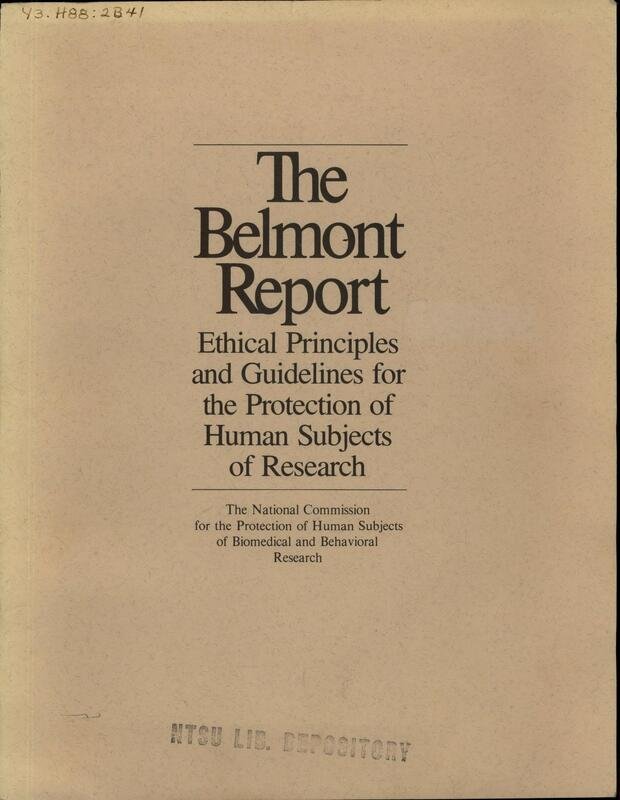
The National Commission’s report identifying respect for persons, beneficence, and justice as basic ethical principles for research involving human subjects.
American bioethics became increasingly institutionalized while its authority, assumptions, and decision-making structures were simultaneously contested.
Dates and descriptions are drawn from the project’s Omeka records.
A federal bioethics commission created by Congress in 1978, with presidential appointments announced in 1979, that operated from 1980 to 1983 and advised the President and Congress on ethical problems in medicine and biomedical and behavioral research.
Veatch challenged the idea that the medical profession could define its own ethics through inherited codes and professional traditions. He proposed a covenantal account grounded in agreements between medicine and the wider moral community, then developed principles governing autonomy, honesty, justice, contract keeping, and the avoidance of killing.
The President's Commission's 1981 report examined medical, legal, and ethical questions surrounding the determination of death and recommended a uniform statutory approach recognizing irreversible cessation of circulatory and respiratory functions or of all functions of the entire brain, including the brain stem.
A series of disputes beginning with the 1982 Bloomington, Indiana Infant Doe case concerning treatment decisions for newborns with disabilities. Federal interventions, litigation, and subsequent legislation brought disability discrimination, parental authority, medical judgment, and quality-of-life assessments into national debate.
This federal commission report addressed decisions about cardiopulmonary resuscitation, artificial nutrition and hydration, treatment of seriously ill newborns, and care for patients unable to decide for themselves. It argued that competent patients may refuse life-sustaining treatment and that surrogate decisions should attend to the patient’s own values and welfare.
Written in Denver in June 1983 by people with AIDS, the Denver Principles rejected passive labels, articulated rights and responsibilities, and called for people with AIDS to participate at every level of decision-making and to be included in AIDS forums as credible participants.
Congress enacted the National Organ Transplant Act in 1984. The law established the framework for the Organ Procurement and Transplantation Network, a national registry and matching system, and prohibited the transfer of human organs for valuable consideration.
Daniels recast access to health care as a problem of justice rather than charity or consumer preference. Drawing on Rawlsian political philosophy, he argued that disease and disability restrict people’s normal range of opportunities and that protecting fair opportunity provides a basis for assigning special importance to health needs.
Faden and Beauchamp combined historical research with philosophical analysis to explain how informed consent developed in clinical medicine, research regulation, and law. They distinguished autonomous authorization from the institutional rules and disclosure practices commonly called informed consent, then examined understanding, voluntariness, competence, and manipulation.
Engelhardt offered a systematic and deliberately controversial account of secular bioethics in a morally plural society. He argued that people divided by fundamental moral commitments cannot appeal to one content-rich morality as a common authority.
Partners In Health was founded in 1987 by Paul Farmer, Ophelia Dahl, Jim Yong Kim, Todd McCormack, and Thomas J. White to support community-based health work begun in Haiti.
On October 11, 1988, AIDS activists from around the United States demonstrated at the Food and Drug Administration headquarters in Rockville, Maryland, demanding faster research, development, approval, and access to AIDS treatments.
Pellegrino and Thomasma responded to the conflict between medical paternalism and an autonomy understood mainly as patient control. They proposed “beneficence-in-trust,” an account in which clinical judgment, the patient’s values, and the moral commitments of the healing relationship jointly define the patient’s good.
Potter returned to the expansive meaning of bioethics he had proposed in the early 1970s and connected human health to ecological survival, population, and the ethical use of biological knowledge. Building on Aldo Leopold, he argued that medical bioethics and ecological ethics should be understood within a single global framework.
Jonsen and Toulmin recovered casuistry from its reputation as clever rationalization by reconstructing a tradition of reasoning from paradigmatic cases, circumstances, and moral maxims. Their history followed the method from antiquity through medieval and early modern moral theology and argued for its revival in contemporary practical ethics.
Susan Sherwin's 1989 article compared feminist ethics and medical ethics as contextual approaches while arguing that feminist political analysis changes which contextual features and power relations receive ethical attention.
In 1990, community representatives were formally incorporated into the AIDS Clinical Trials Group, extending the role of people affected by HIV/AIDS from advocacy outside research institutions toward participation within federally supported clinical-research governance.
In Cruzan v. Director, Missouri Department of Health, the U.S. Supreme Court addressed withdrawal of life-sustaining treatment for an incapacitated patient and upheld Missouri's requirement of clear and convincing evidence of the patient's wishes.
The Ethical, Legal, and Social Implications (ELSI) Research Program was established as an integral component of the Human Genome Project to identify and address ethical, legal, and social issues arising from genomic research.
Rothman traced the decline of medicine’s largely self-regulating authority from the postwar expansion of human experimentation through research scandals, new federal rules, court decisions, and bedside controversies. His “strangers” include lawyers, judges, philosophers, regulators, and lay participants who entered decisions once treated as the physician’s domain.
Edited by Jonathan M. Mann, Daniel J. M. Tarantola, and Thomas W. Netter for the Global AIDS Policy Coalition. Cambridge, Massachusetts: Harvard University Press, 1992. xiv + 1,037 pages. ISBN 0-674-01265-8 and 0-674-01266-6. All three individuals are coeditors; the Global AIDS Policy Coalition is the responsible organizational context, not a substitute individual author.
Cambridge Quarterly of Healthcare Ethics. Cambridge University Press. First volume published in 1992. ISSN 0963-1801. Thomasine K. Kushner and David C. Thomasma were founding editors.
Edited by Annas and Grodin, this collection placed the Nuremberg Code within the history of Nazi medicine, the Doctors’ Trial, international law, and contemporary research ethics. Its contributors examined both the Code’s origins and the uneven course of its reception in the United States.
The François-Xavier Bagnoud Center for Health and Human Rights was founded and endowed by Albina du Boisrouvray at Harvard in 1993. Jonathan M. Mann served as its first director and advanced its framework connecting health, dignity, and human rights.
The NIH Revitalization Act of 1993 established statutory requirements concerning inclusion of women and members of minority groups in NIH-supported clinical research. NIH issued implementing guidelines in 1994 that strengthened and superseded earlier inclusion policies.
Disclosure of Cold War human radiation experiments raised questions about consent, secrecy, health risks, and federal accountability. President Clinton established the Advisory Committee on Human Radiation Experiments in January 1994 to examine that record and consider what government owed the people affected.
The Committee investigated past experiments, evaluated historical and contemporary standards, and issued a 1995 final report addressing disclosure, remedies, and protections for research participants. Its archival inquiry made the ethical assessment of government-sponsored experimentation a matter of public record.
Oregon voters approved the Death with Dignity Act in 1994. Litigation delayed implementation, and voters rejected a repeal measure in 1997, after which the statutory framework took effect.
Ray developed a model for ethical analysis in clinical encounters shaped by cultural difference. The framework combined caring practices, ethical principles, social values, and spiritual or religious beliefs, while treating interaction itself as transcultural rather than assuming a neutral clinical norm.
The University of Pennsylvania Center for Bioethics was founded in 1994 by Arthur L. Caplan as an interdisciplinary center for bioethics scholarship, education, and engagement with medicine and public policy.
A cross-university faculty interest group developed into a formally established Johns Hopkins bioethics institute in 1995, with Ruth Faden as founder and director. The Berman Institute brought ethical inquiry across the university's schools as questions of public health, research, justice, and clinical care increasingly met.
The Institute supported interdisciplinary research, education, and public engagement across research ethics, population health, justice, and clinical practice. Its cross-school structure gave bioethics a university-wide institutional setting rather than confining it to one professional program.
Executive Order 12975 established the National Bioethics Advisory Commission in 1995 as genetics, cloning, and other biomedical developments pressed federal agencies for ethical guidance. The Commission first met in 1996 and continued through a period of rapid debate about research involving human participants and human biological materials.
Its reports addressed cloning, research involving people with mental disorders, stem-cell research, international clinical trials, and protections for human participants. Among them were Cloning Human Beings (1997), Ethical Issues in Human Stem Cell Research (1999), and two 2001 reports on international research and human-participant protections.
The NIH Clinical Center launched a dedicated bioethics department in late 1996 within a federal research hospital. Its location matters: investigators and clinicians there encounter ethical questions as research and care take place, not only when an external commission is convened. Ezekiel J. Emanuel became the department's first Chief in 1997.
The department conducts conceptual, empirical, and policy research; trains bioethicists; and provides ethics consultation and advice to investigators and review bodies. These activities make ethical analysis part of the continuing practice of clinical research at NIH.
The Tuskegee Syphilis Study Legacy Committee first met January 18–19, 1996. Chaired by Vanessa Northington Gamble, with John C. Fletcher as co-chair, it urged a federal apology for the harms of the USPHS Syphilis Study at Tuskegee and proposed measures to address its continuing legacy.
Roberts situated contemporary disputes about reproduction within a history of slavery, coerced sterilization, welfare policy, prosecution of pregnant women, and racialized images of Black motherhood. She argued that reproductive liberty cannot be understood only as freedom from government interference; it also requires the social conditions needed to bear and raise children.
Vanessa Northington Gamble. “Under the Shadow of Tuskegee: African Americans and Health Care.” American Journal of Public Health 87, no. 11 (November 1997): 1773–1778. DOI 10.2105/AJPH.87.11.1773. PMID 9366634. PubMed indexes the publication as a Journal Article, Historical Article, and Review.
Three professional societies consolidated in January 1998 after their members approved a merger the previous year. The American Society for Bioethics and Humanities brought established communities in bioethics, health humanities, and ethics consultation into one national association. Its creation followed decades in which these interests had developed through separate organizations.
ASBH provided a shared professional forum and developed resources for health-care ethics consultation, including Core Competencies for Healthcare Ethics Consultants and a professional code. Those materials addressed the practice and responsibilities of consultation as bioethics became more established in health-care institutions.
Silvers, Wasserman, and Mahowald brought different theories of justice to disability policy and bioethics after the Americans with Disabilities Act. Their arguments addressed discrimination, genetic selection, treatment of disabled newborns, assisted death, independence, and the social organization of disability.
Jonsen’s history follows American bioethics from postwar research ethics through genetics, transplantation, death and dying, reproduction, government commissions, and the formation of a recognizable field. Drawing on archives and interviews, he described how theologians, philosophers, lawyers, social scientists, physicians, and public bodies entered moral questions once governed mainly within medicine.
A Hastings Center project report edited by Erik Parens and Adrienne Asch examining disability-rights critiques of prenatal genetic testing, including concerns about assumptions concerning disability, parental decision-making, selective abortion, and the messages communicated by testing practices.